

We have a big week coming up with the Fed and the Bank of England deciding on rates, while the rest of Big Tech delivers their earnings, all with a backdrop of a widening war. This week was a good preview of what to expect, with a hawkish hold from the ECB and Google's capex guidance increase.
Maradona Theory of Interest Rates
While the market is pricing in one confirmed rate hike, and perhaps a second, for this year, we hold a different view. We subscribe to the Maradona Theory of interest rates, coined by former Bank of England Governor Mervyn King. We introduced this in our Mid-Year Update earlier this month.
The theory takes its name from Maradona’s famous 1986 World Cup quarterfinal goal, where he ran in a straight line outmaneuvering English defenders who were braced for his signature swerves.
We think Fed Chair Warsh is playing this game well. He’s creating a mysterious air around the Fed by holding back guidance and setting a hawkish tone from the outset. That’s not just a vibe, it’s policy: Warsh has launched five internal task forces to review how the Fed makes and communicates decisions, and he pointedly declined to submit his own dot at the June meeting, breaking with over a decade of precedent. Less forward guidance means more uncertainty priced into every meeting, by design.
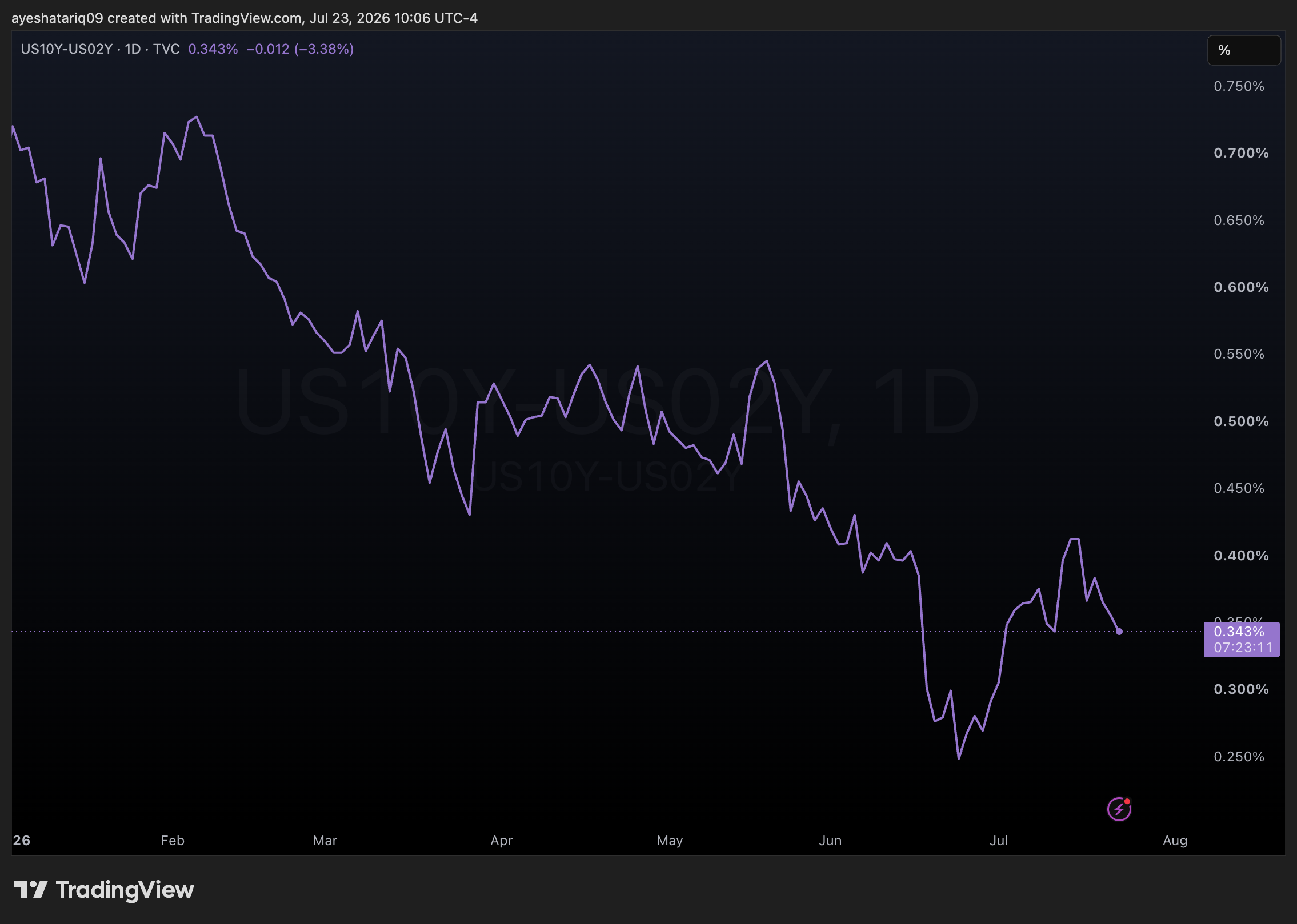
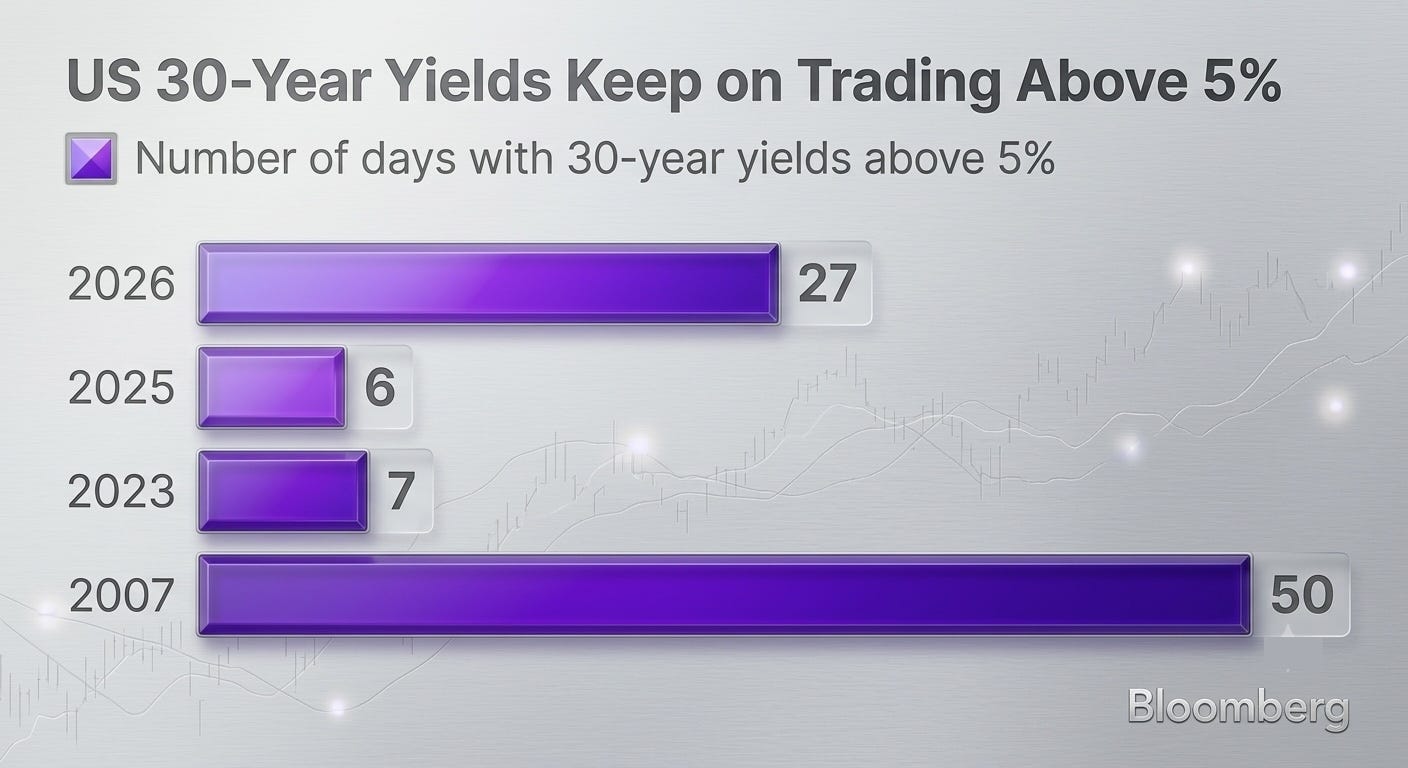
The Fed may not need to hike at all, since the market is doing its work for it. The long end is already pricing in inflation and the uncertainty of war, with yields crossing the 5% mark, while the short end is pricing in the anticipation of Fed hikes. We’re ready to tackle these swerves, but the Fed may just decide to run in a straight line.
AI Capex Fatigue
Speaking of yields, this ties into a bigger funding story. Google’s capex guidance increase was a net negative, and the market agreed, despite evidence that AI demand is growing. It remains to be seen whether other Mega Cap companies follow suit next week, though given the race we’ve seen in recent quarters, it’s almost expected.
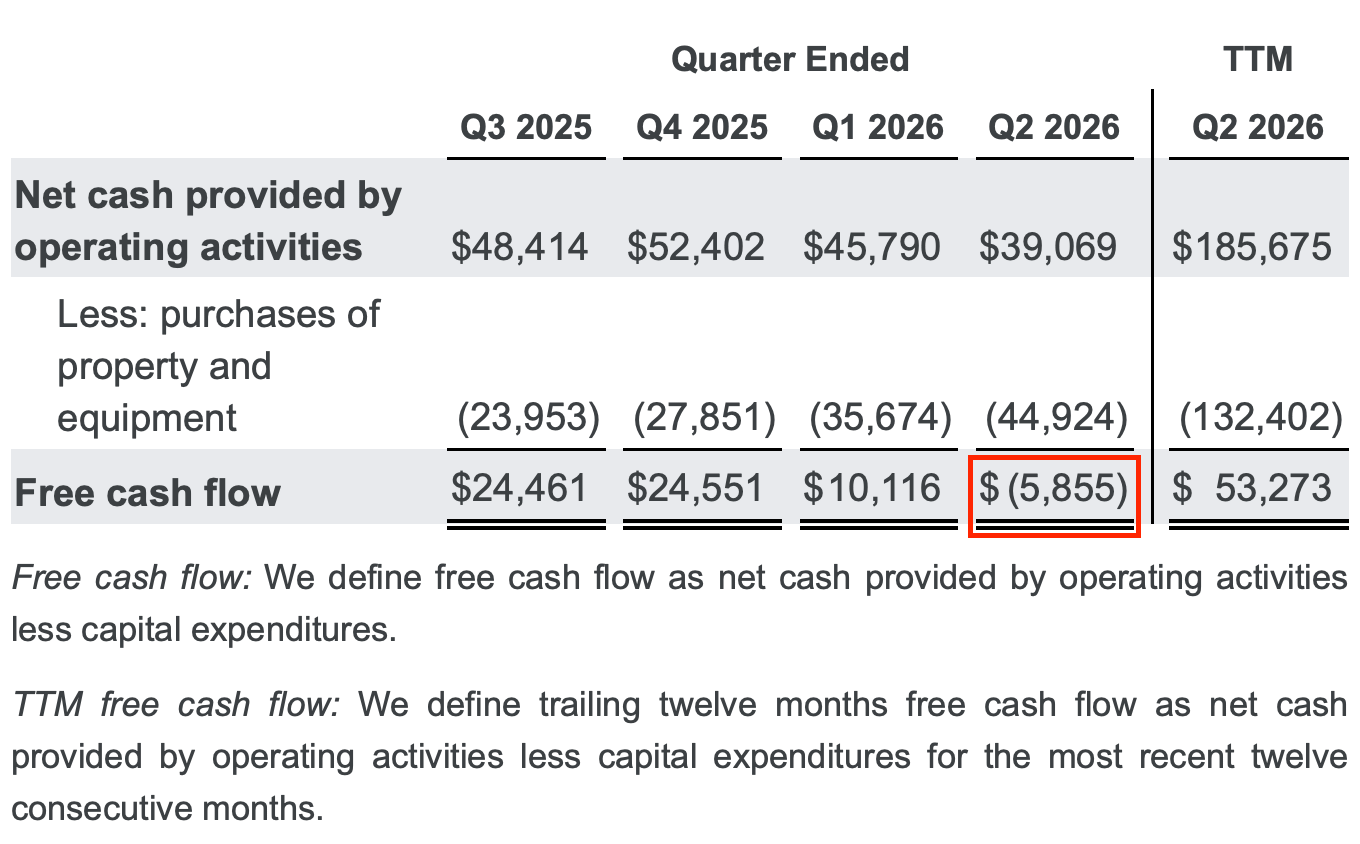
The real question is how this capex gets funded. Google’s free cash flow turned negative this quarter, confirming what we already suspected: that hyperscalers will increasingly turn to capital markets to fund this spending.
Across the five largest hyperscalers, aggregate debt issuance has already climbed from roughly $40 to 50 billion in 2022, largely to fund buybacks, to around $190 billion this year, primarily to support datacenter buildout. That doesn’t just weaken their financial position structurally; it also pushes up yields more broadly, as investors demand more reward for lending to companies that are now, by definition, riskier.
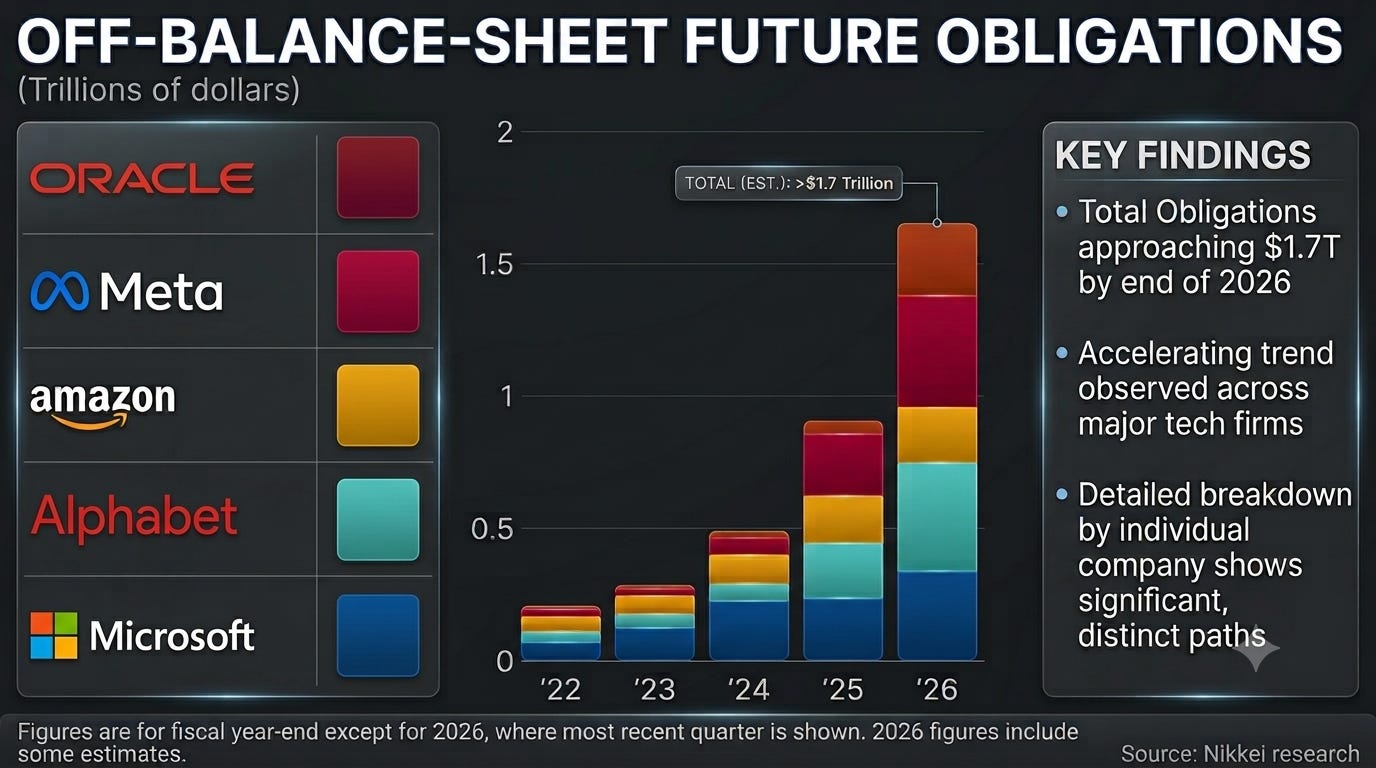
And that $190 billion in debt is only the part that shows up on the balance sheet. Off-balance-sheet future obligations, largely long-term data center leases, across Microsoft, Alphabet, Amazon, Meta, and Oracle have gone from roughly $200 billion in 2022 to an estimated $1.65 trillion this year. That's the real scale of the commitment being funded, and it's a scale that doesn't show up cleanly in a debt-to-equity ratio.
Organic cash flow alone gets hyperscalers to roughly $1 trillion of the funding need. The rest, several trillion more, is expected to come from incremental equity, structured products, high grade and leveraged debt markets.
The counterweight to all this is that the underlying demand story hasn’t broken. TSMC’s own results this quarter beat expectations, with revenue guidance raised to over 40% year-over-year growth and 2026 capex guidance lifted to $60 to 64 billion, with further upside flagged into 2027 and 2028. So this isn’t a case of AI demand cracking; it’s a case of the market repricing who bears the risk of funding it. Model costs, application returns, and infrastructure requirements are all still unresolved, and the market is pricing that uncertainty directly into the cost of capital.
This comes at a time when sovereign yields in the Middle East are also moving higher. Middle Eastern capital has been an important, and relatively stable, source of funding for the AI trade, so as that money gets pricier, it leaves a gap.
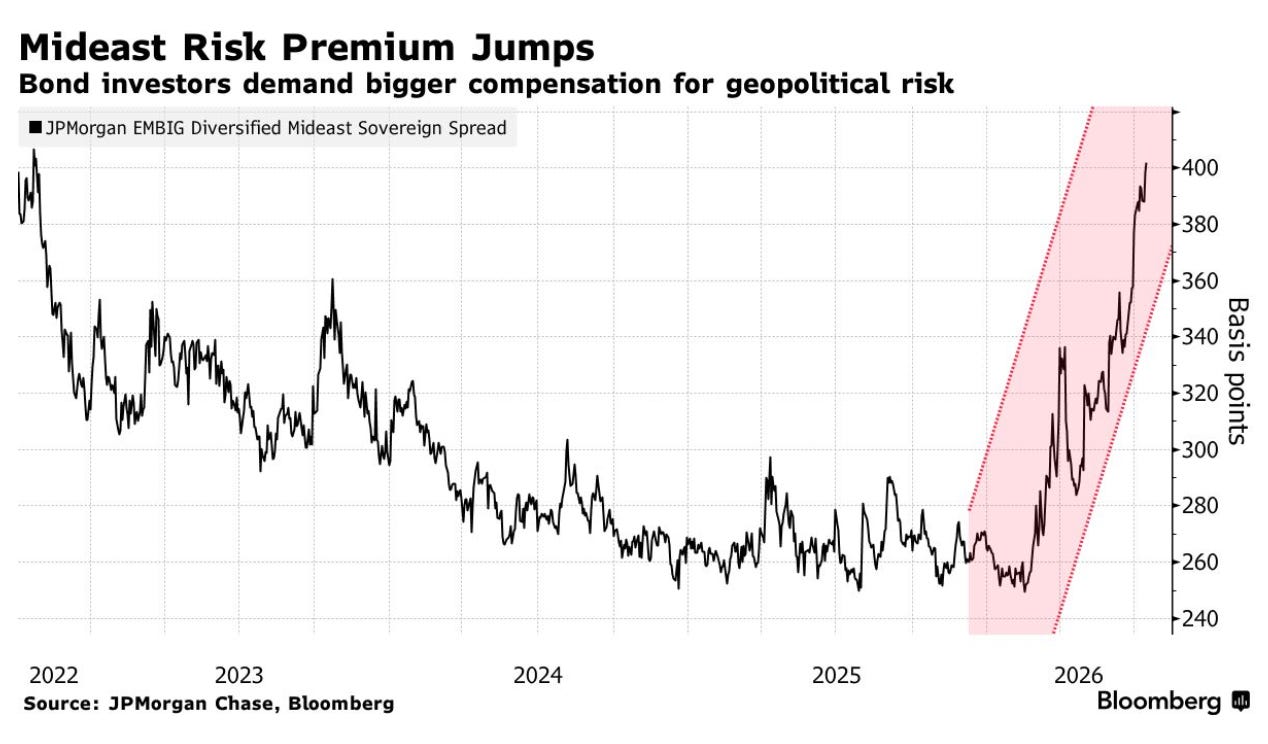
What appears to be filling that gap looks less like patient, real money and more like retail capital, flowing in through highly leveraged, short-dated positioning such as 0DTE options and leveraged ETFs. That shift in who is funding the trade helps explain why momentum has become so much more volatile recently, with realized volatility in the factor hitting some of its highest levels in decades outside of a recession. It also leaves the market more fragile than usual. Any bit of bad news, and that momentum can reverse quickly, sometimes quite violently.
Emerging Markets in a Familiar Bind
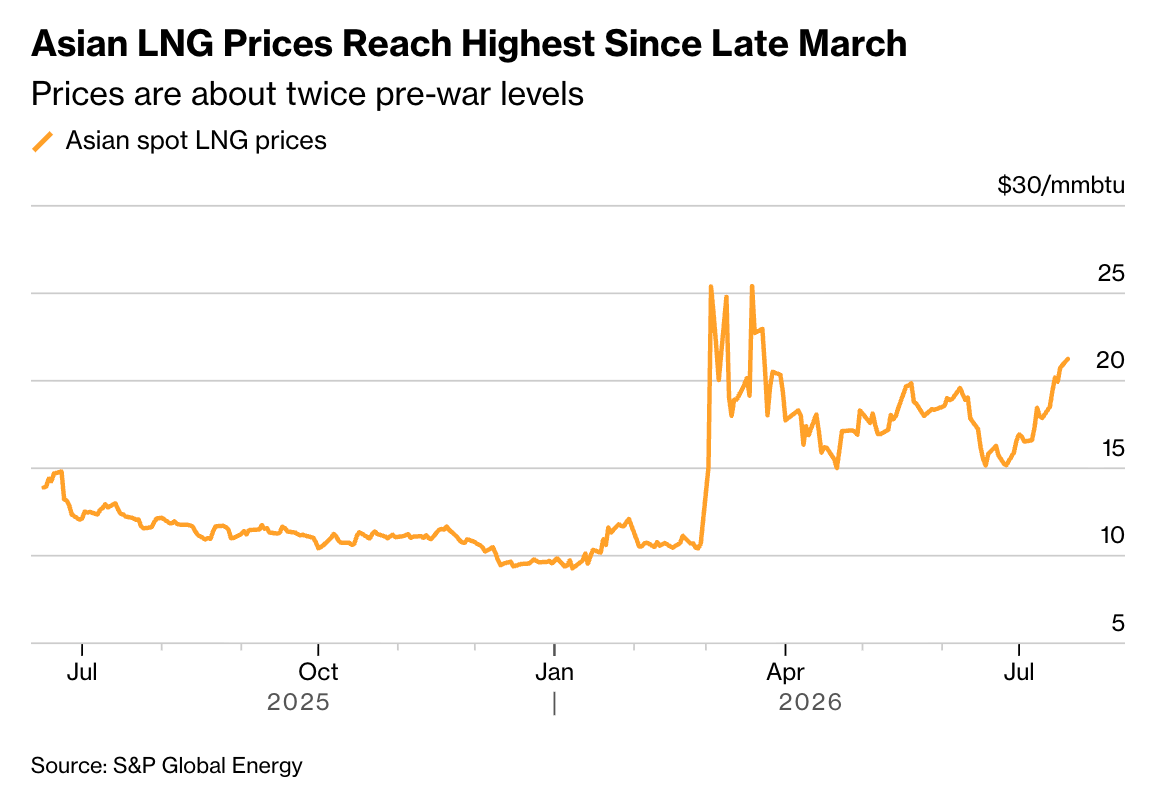
The widening Middle East conflict is squeezing emerging markets on two fronts at once. On the ground, Hormuz supply disruptions have forced cash-strapped energy importers into the spot LNG market at painful prices. Pakistan’s most recent cargo priced near $22 per million BTUs, the highest since 2022 and roughly double what it would pay under a long-term Qatari contract, straining government finances in both Pakistan and Bangladesh and pushing each to accelerate away from imported LNG, Pakistan toward nuclear and coal, Bangladesh toward solar.
We’ve previously talked about the EMs being a story of AI Have’s and AI Have-Not’s, where markets with AI exposure have stronger growth potential.
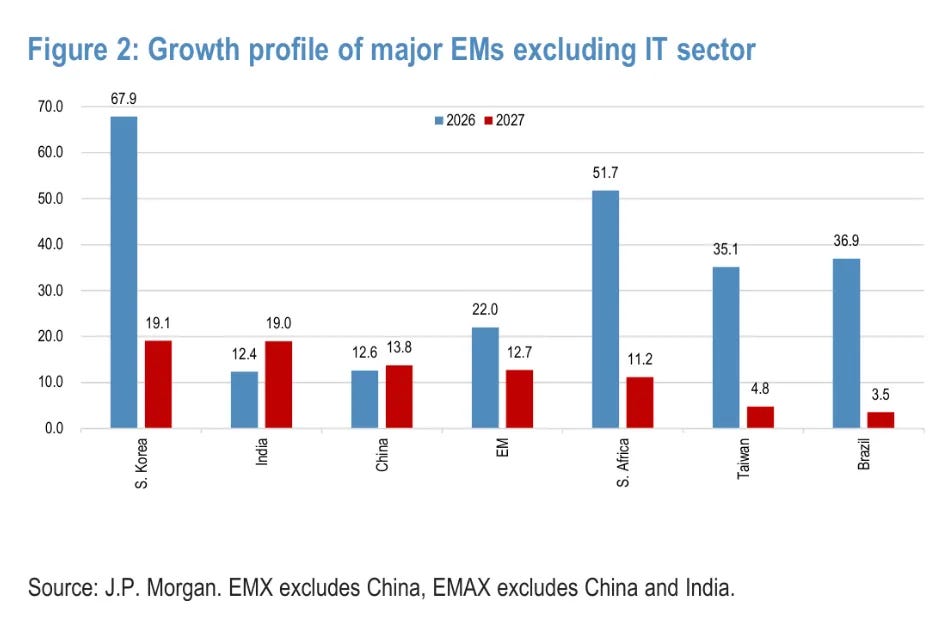
The conflict is one of several headwinds facing non-AI emerging markets, alongside a stronger dollar and rising odds of an earlier Fed hike. EM equities are down roughly 11% since their June 22 peak, and foreign institutional inflows into EM funds have fallen about 40% from their April high. The base case among strategists is still eventual de-escalation and valuation remains cheap at 10x forward earnings. But, we remain cautious given how exposed EM funding and energy costs are to a prolonged conflict.
Portfolio Allocation (1-3 months)
Long Brent: The futures curve has flipped into backwardation as Hormuz tensions persist, so we get paid through positive roll yield as we roll into progressively cheaper forward contracts. That’s a return stream on top of any further spot price appreciation, not instead of it.
Long Korea (I am personally long here): Leverage has come off substantially since the leveraged-ETF-driven unwind earlier this year, with over $100 billion pulled out of Korean and Asian tech leveraged ETFs, $63 billion of that from semis alone. Korean leveraged ETF assets are now back to pre-launch levels, leaving a healthier, less crowded market with a lower risk of forced selling from here.
Short US Treasuries, particularly the long end: Yields are repricing higher with the conflict in the Middle East leading to higher inflation risks. Core inflation has held above 3% all year, the Fed is on hold rather than cutting under a deliberately hawkish Warsh, and the Bank of Japan’s own hiking cycle is pulling JGB yields, and global yields with them, higher still. The increased cost of the war also pushed up long-end yields directly. With three separate forces pointing the same direction, this remains our highest conviction call of the three.