
Breakfast Bites: The Capex Bill Comes Due
Google and Tesla both beat on the top line and sold off anyway, the ECB leans hawkish into a widening Middle East war, and the Red Sea becomes the newest flashpoint.

Rise and shine everyone.
Google and Tesla both reported after Wednesday’s close, and both stocks fell despite beating on revenue. That is not a coincidence. It is the market drawing a line on how much capital spending it will tolerate before it wants cash back. Google raised its already enormous capex guidance to $195 billion to $205 billion and posted negative free cash flow this quarter, confirming what I have been arguing for a while now. Hyperscalers are shifting from funding AI off their own balance sheets to funding it in the credit and equity markets, and that has consequences for every other borrower competing for the same capital.
The war is widening at the same time. Houthi forces struck a Saudi tanker in the Red Sea overnight, Iranian drone strikes hit CIA facilities in the Gulf, and Washington is now investigating whether Russia helped target them. Oil is climbing again on top of all of it, and the ECB is expected to hold rates this morning with a hawkish lean that keeps a September hike alive.
Here is what we are watching today:
Google’s earnings results and what that means for AI-linked borrowing costs and the capex increase rivalry between hyperscalers
The Red Sea war widening overnight, with a Saudi tanker struck by the Houthis and Iranian strikes on CIA facilities in the Gulf keeping oil bid toward the $100 WTI level
The ECB’s rate decision this morning, where the hold is not really the story, the fight over a September hike is
Goldman’s credit desk is already floating a contrarian buy on hyperscaler bonds yielding north of 6%, and on oil, $100 on WTI is now a Red Sea problem as much as a Strait of Hormuz one.
Morning Macro Briefing
The war widened again overnight. Houthi forces struck the Saudi-owned tanker Encelia in the Red Sea, and ship-tracking data show it may have lost maneuverability, now signaling a “not under command” status. Two Chinese-owned supertankers loaded with Saudi crude are still pushing through the Bab-el-Mandeb chokepoint, broadcasting their links to China in what looks like an attempt to buy the safe passage the Houthis are denying everyone else.
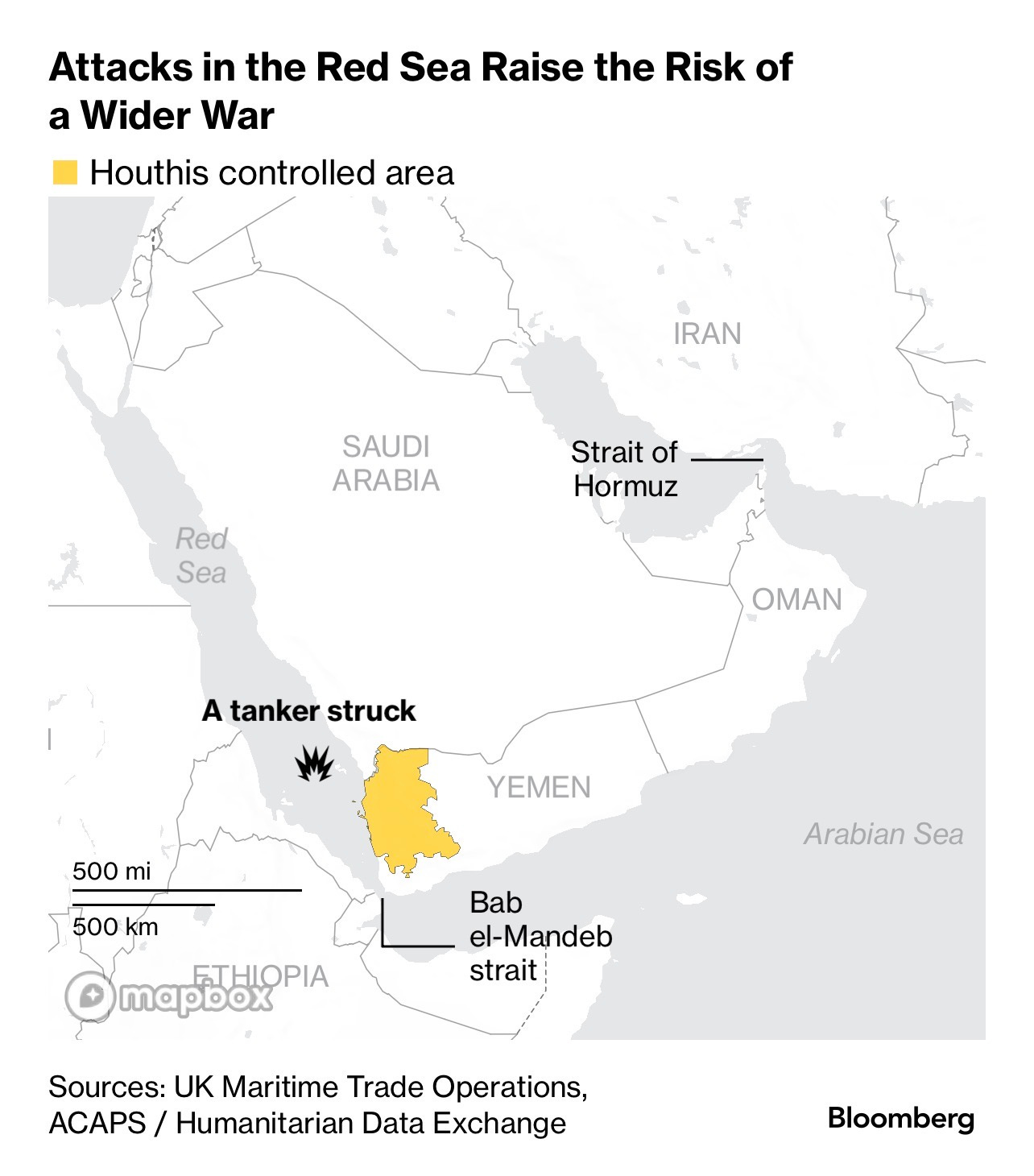
That is already rerouting oil flows. A supertanker sailing the direct route from Yanbu to China costs about $11.5 million and takes a month. The detour around Africa via the Suez costs $18.7 million and adds three weeks. Traffic through Bab-el-Mandeb has already thinned to eight tankers Wednesday from sixteen the day before, and every reroute adds cost that eventually shows up in freight rates and delivered fuel prices.
Separately, Iranian drone strikes hit CIA facilities in the Gulf, and US intelligence is now investigating whether Russia assisted with targeting or drone technology. Trump has threatened to hit Iranian power plants, including in Tehran, every time a ship gets attacked. None of this looks like a war winding down, and I would fade any relief rally in oil that comes purely from a ceasefire headline rather than an actual halt in strikes.
The ECB is expected to hold rates at 8:15 am ET this morning, and almost nobody disagrees with the hold itself. A hawkish hold means the bank leaves rates unchanged but leans on its language and press conference to signal it is still inclined to tighten later, in this case around a September meeting that markets are already pricing as close to a done deal.
I would be cautious holding EUR/USD long above 1.140 unless Lagarde’s press conference explicitly keeps that September hike story alive. The case for the hike rests heavily on oil feeding into wages, and the ECB’s own small business survey just showed one-year wage expectations falling to the lowest reading since the survey started in 2023. If a hawkish hold turns out to hedge rather than commit, 1.133, the June low, comes back into play fast.
In Japan, US financial press reported overnight that the BOJ is weighing faster rate hikes than its usual six-month cadence to fight inflation risk from a weak yen, which is still hovering just shy of its 40-year low. The front end of the JGB curve is steepening hard too, with 2-year yields touching 1.50% for the first time since 1995. I would stay cautious pressing short yen positions here, the BOJ has talked this specific before without acting, but talk this precise usually precedes action within a quarter or two.
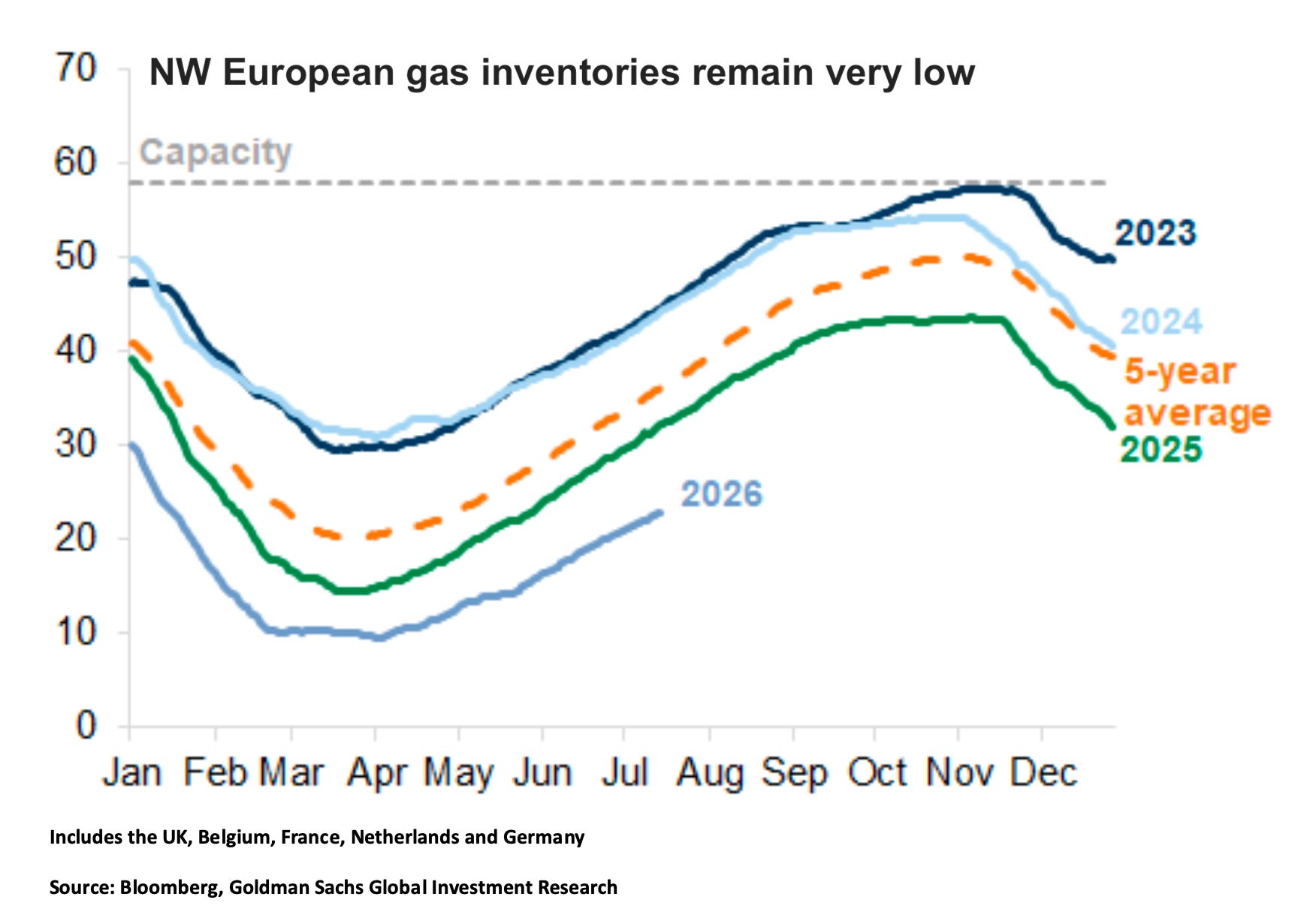
WTI closed Wednesday near $85 a barrel, up about 2%, while Brent has been testing highs last seen in early June. GS flags that visible LNG exports through the Strait of Hormuz have effectively halted, and with Northwest European gas storage already running low heading into winter, that is a second, quieter energy story sitting behind the oil headlines.
$100 on WTI is still the level I am watching, but the Red Sea attacks now give it a second catalyst beyond the Strait of Hormuz. Below $100 this stays a premium that can unwind on real de-escalation. Above it, this stops being a geopolitical scare and starts being a genuine supply problem.
There was a small piece of good news buried in yesterday’s data. EIA crude and gasoline inventories drew down by less than expected, meaning the market has a bit more of a supply cushion than feared. It will not undo the Red Sea story, but it takes some immediate pressure off the oil price at the margin.
South Korea’s economy grew 0.6% quarter on quarter in the second quarter, ahead of the 0.4% forecast, though down from a blistering 1.8% in the first quarter. Year over year growth came in at 3.7%, also ahead of consensus, driven mainly by semiconductor and machinery exports holding up even with a regional war next door. Korea is as good a bellwether as any for global tech demand right now, and this print backs the Bank of Korea’s decision to raise its own 2026 growth guidance.
Chart of the Day
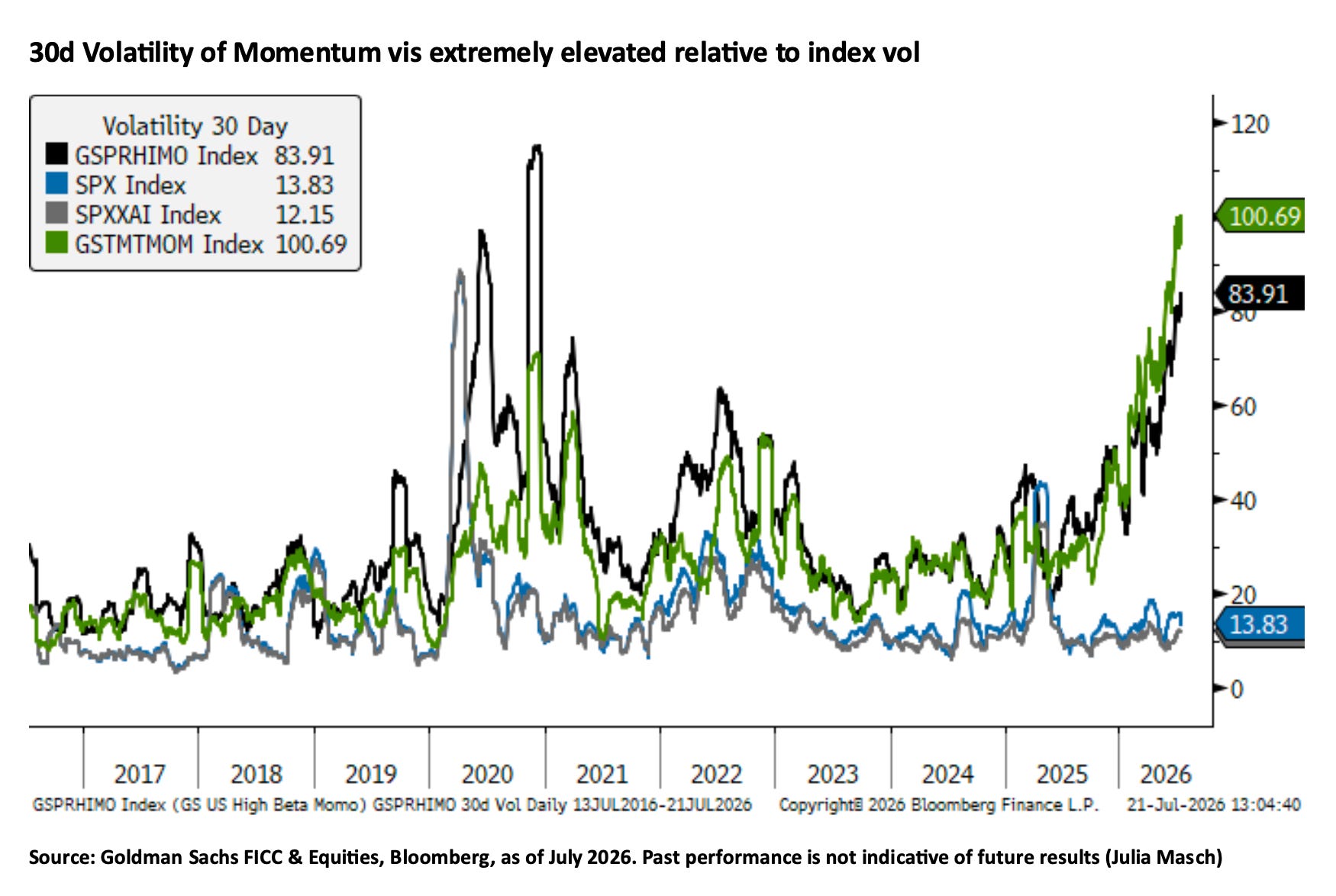
The chart I would pull today has nothing to do with oil or earnings. It shows how violently the momentum factor has been trading. Goldman’s Jacob Malmstrom flagged 36% annualized realized volatility in momentum over the past three months, the highest level in 45 years of history outside a recession. Nomura’s Charlie McElligott makes a related point, that after this kind of whipsaw the setup for an August vol squeeze is building, even if the next week or two still favors chasing the earnings bounce. I would use near-term strength in Momentum and Tech to trim into it rather than chase it further, since the volatility regime underneath this rally has shifted more than the price action suggests.
Calendars
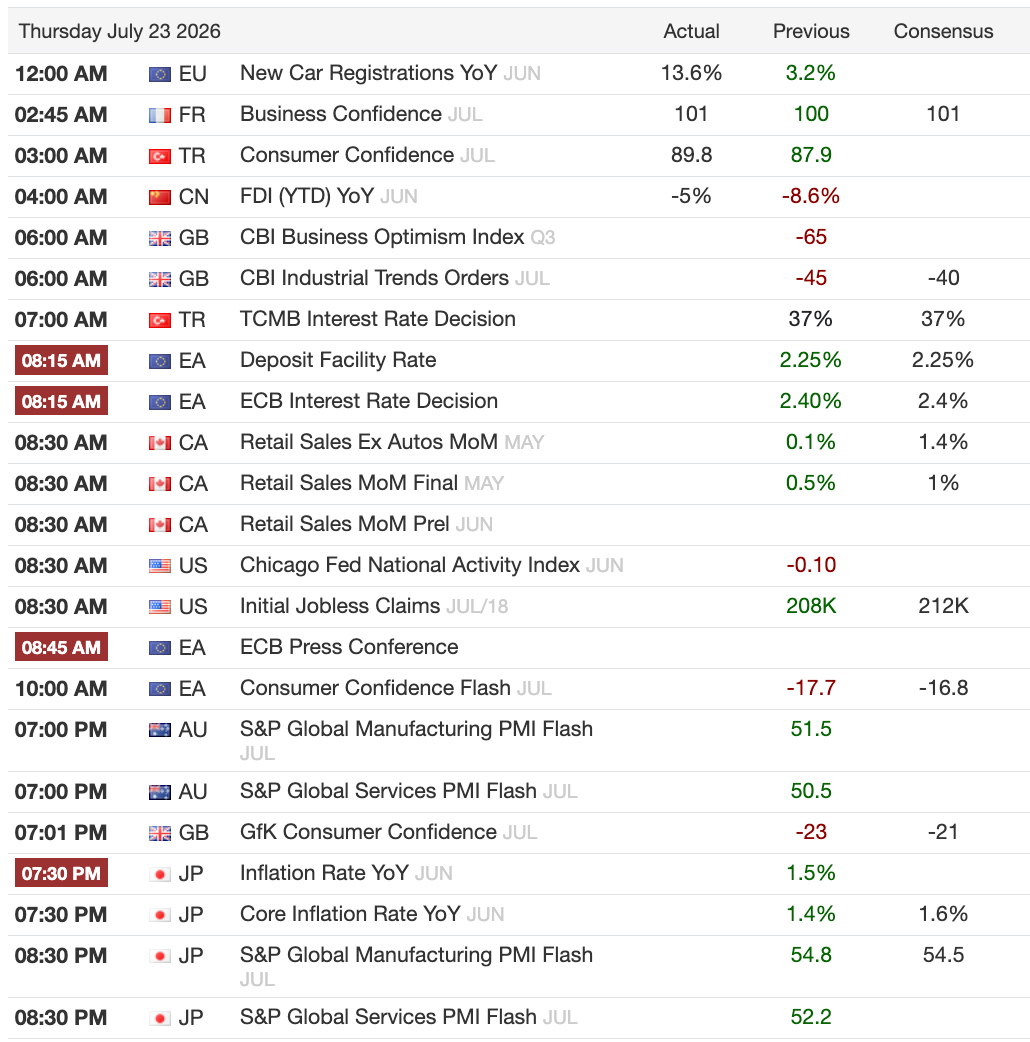
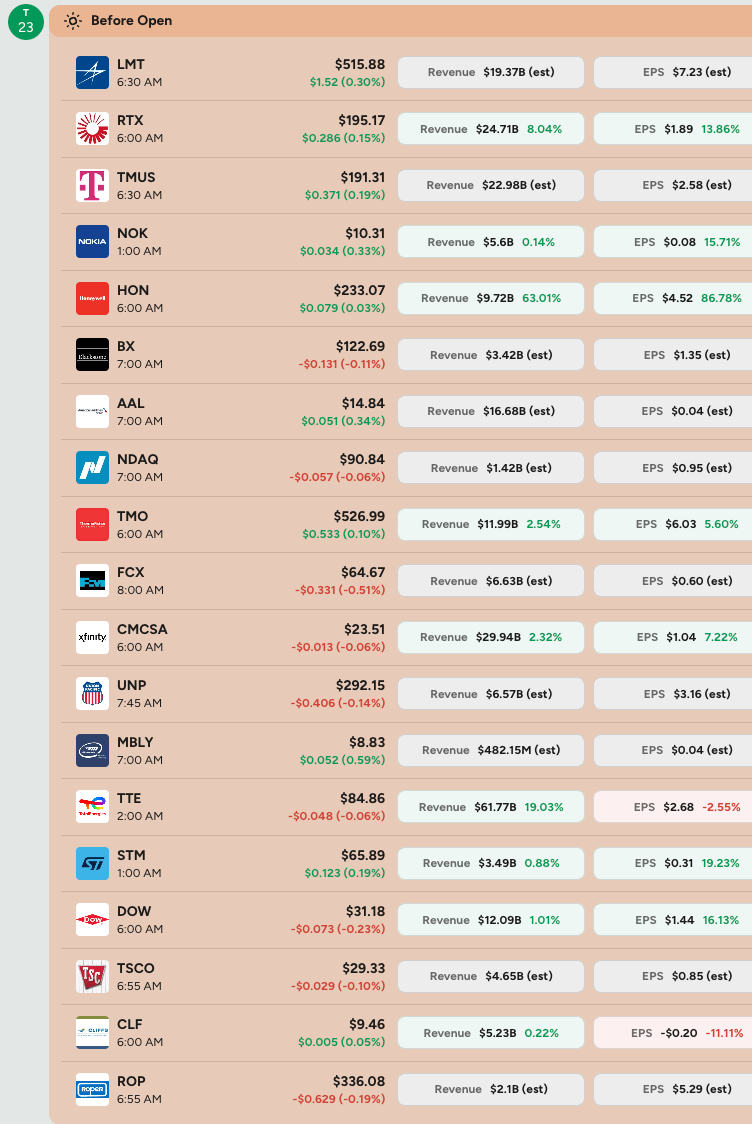
Today’s calendar is dense even before earnings. The ECB decision is due at 8:15am ET alongside Eurozone consumer confidence, and Japan’s CPI and PMI data are due tonight. US jobless claims and the Chicago Fed National Activity Index are out at 8:30am ET, and more than thirty companies report earnings today, including Intel, Honeywell, RTX, Union Pacific and T-Mobile.
Market Prep
Wednesday was a quiet, wait-and-see session ahead of the evening’s earnings. The S&P slipped 0.1%, the Nasdaq 100 fell 0.5% and the Russell 2000 lagged with a 0.9% decline, while the VIX held near 16.6. WTI added about 2% to close near $85, gold pushed above $4,100 and the 10-year yield sat near 4.66%. Nobody wanted to take a big position ahead of Google, Tesla, ServiceNow and Texas Instruments reporting after the bell.
Google beat on Search and blew past expectations on Cloud, up 82% year over year, but operating income of $41 billion missed what buyside investors were actually modeling even as it beat the Street, and the stock fell 3% anyway. Tesla beat on revenue but missed adjusted earnings and guided full-year capex above $25 billion, nearly three times what it spent in 2025. Both stocks were punished for spending, not for demand.
The read-through from those prints lines up with what I flagged in yesterday’s earnings preview and in today’s opening. Google’s cloud number was the best part of the quarter, but operating income missed the buyside’s higher bar even as it beat the Street, and that was enough to send the stock down 3%. Texas Instruments and ServiceNow both beat cleanly, TXN on margin leverage and inventory discipline, ServiceNow on Federal demand that may not repeat, but neither had the capex weight hanging over its story the way Google and Tesla did.
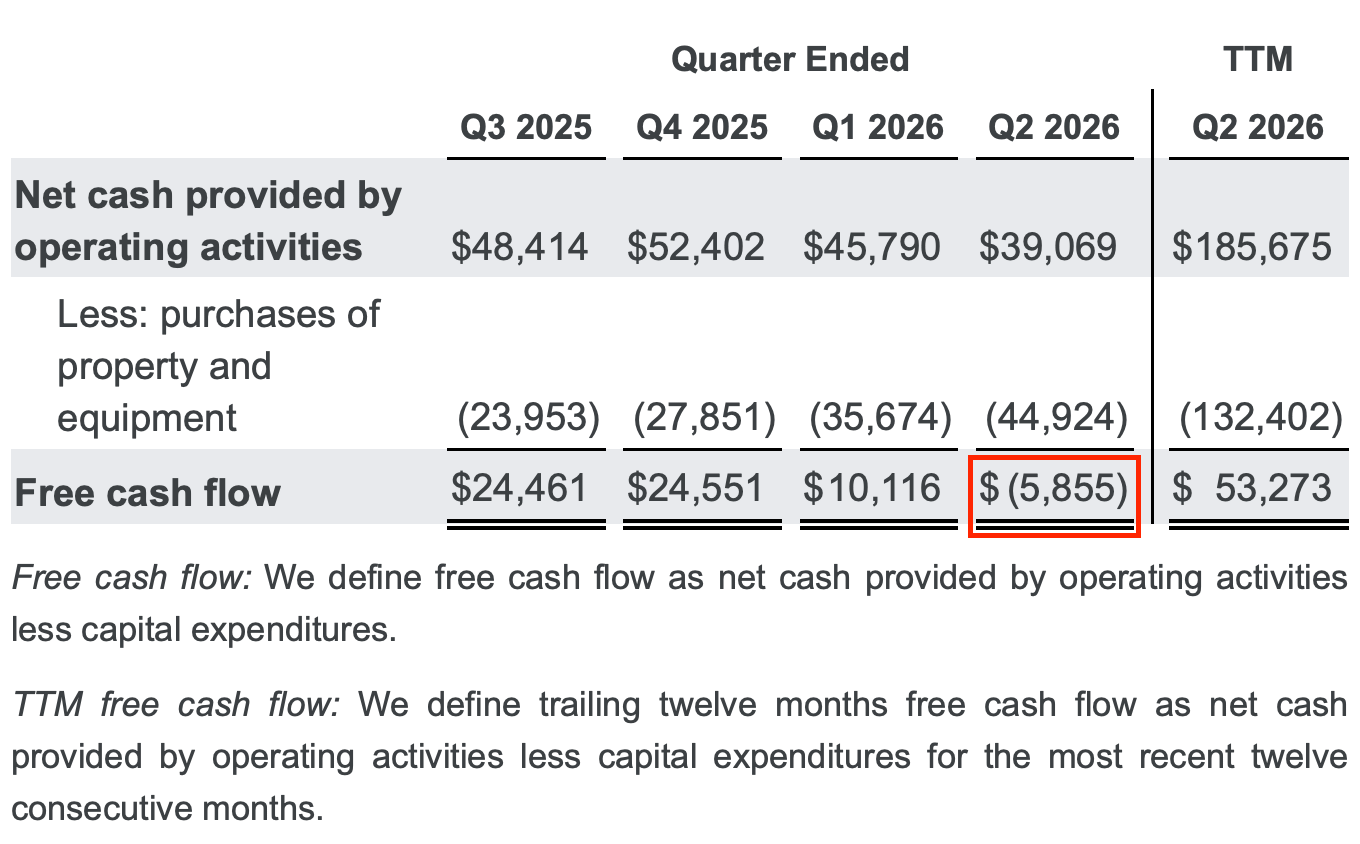
Google’s free cash flow turned negative this quarter, and that is the number I keep coming back to. It confirms hyperscalers are now spending more than they generate.
On market structure, Goldman’s Tony Pasquariello made the point I would underline hardest this week. Momentum just posted its highest three-month realized volatility in 45 years outside a recession, correlation across the index is making multi-decade lows, and a market this concentrated in a handful of AI-linked names tends to produce sharp factor drawdowns even when the index itself looks calm. His advice, simplify the portfolio and live a little cleaner through the summer, is not a bad rule right now.
Three things stand out to me for the rest of today. The ECB decision at 8:15am ET, and whether Lagarde’s language keeps the September hike story alive, with 1.140 the level to watch on EUR/USD. Amazon, Microsoft and Meta all report next week, and given what happened to Google and Tesla overnight, I expect the market to punish any capex number that is not paired with a clearer path to cash flow. And WTI’s approach toward $100 a barrel remains the single most important level in this tape, whether the next catalyst is Hormuz, the Red Sea, or both at once.